15th/16th Centuries
1498
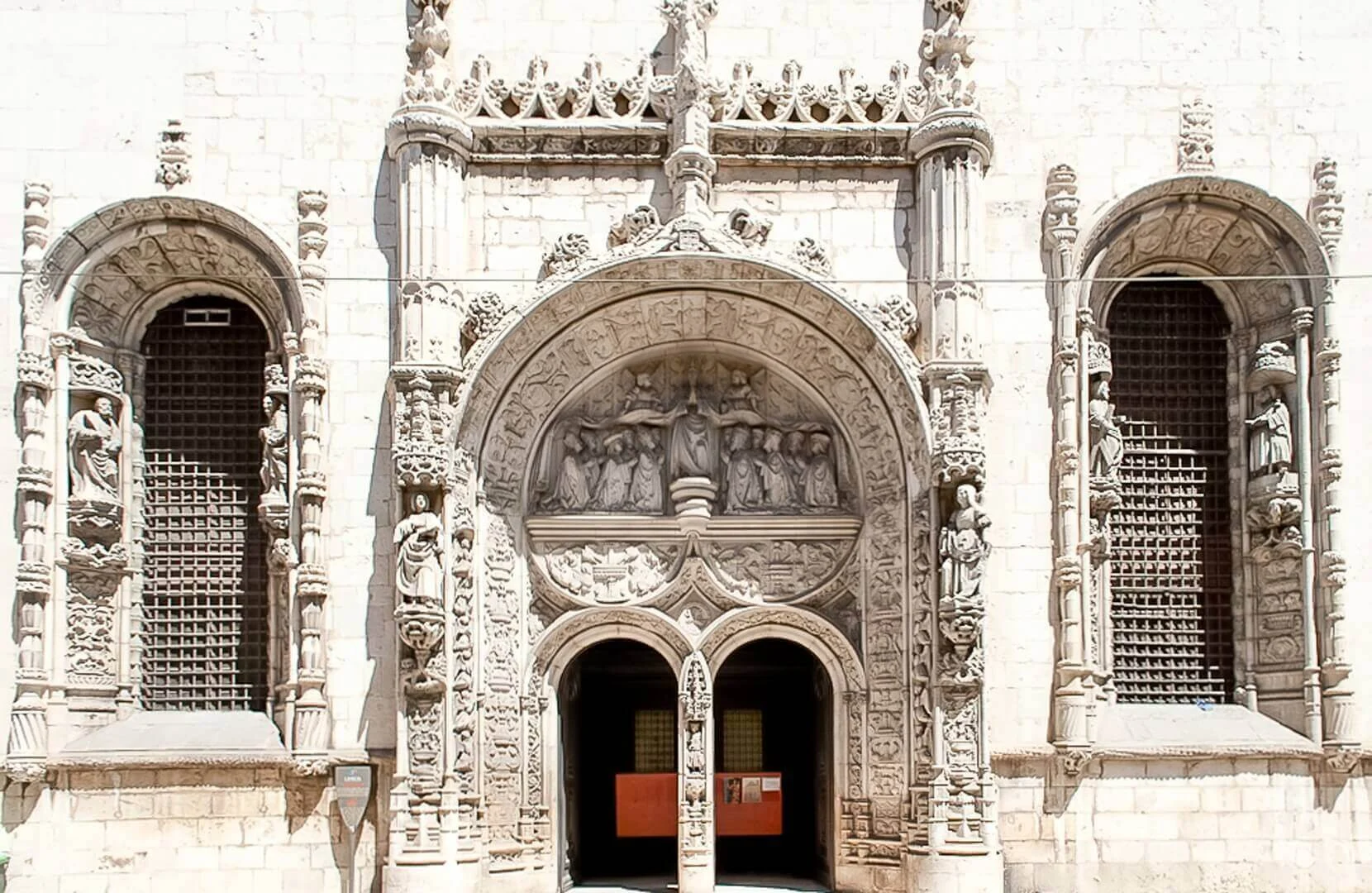
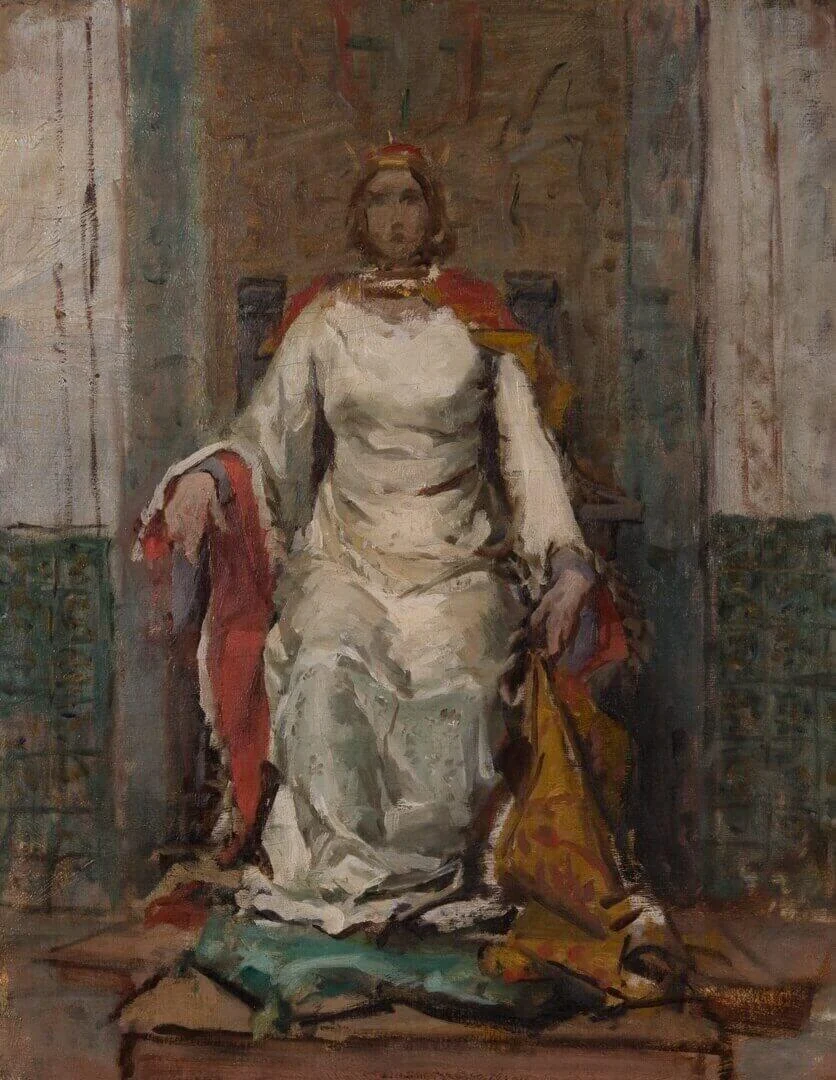
On 15 August 1498, in Lisbon, in the year Portuguese navigators reached India, the first Portuguese Misericórdia was founded as a result of the particular intervention of Queen D. Leonor, with the full support of King D. Manuel I.
The development of maritime expansion, port activity and trade favoured an influx of people to the major urban centres, as was the case of Lisbon. People came seeking work or wealth, in a search that was often fruitless. Living conditions deteriorated. The streets became dens of promiscuity and disease, with beggars and abandoned children gathering in them. Shipwrecks and battles also produced large numbers of widows and orphans, and the situation of those imprisoned in the Kingdom’s jails was distressing.
In this difficult context, D. Leonor, widow of King D. João II, resolved to establish a Brotherhood in the Invocation of Our Lady of Mercy in the Cathedral of Lisbon (Chapel of Our Lady of Mercy or of the Terra Solta), where it then had its seat. After nearly a century of oceanic navigations, a new confraternity thus emerged, guided by the principles set out in the Compromisso (charter or statute) of Misericórdia.
1516
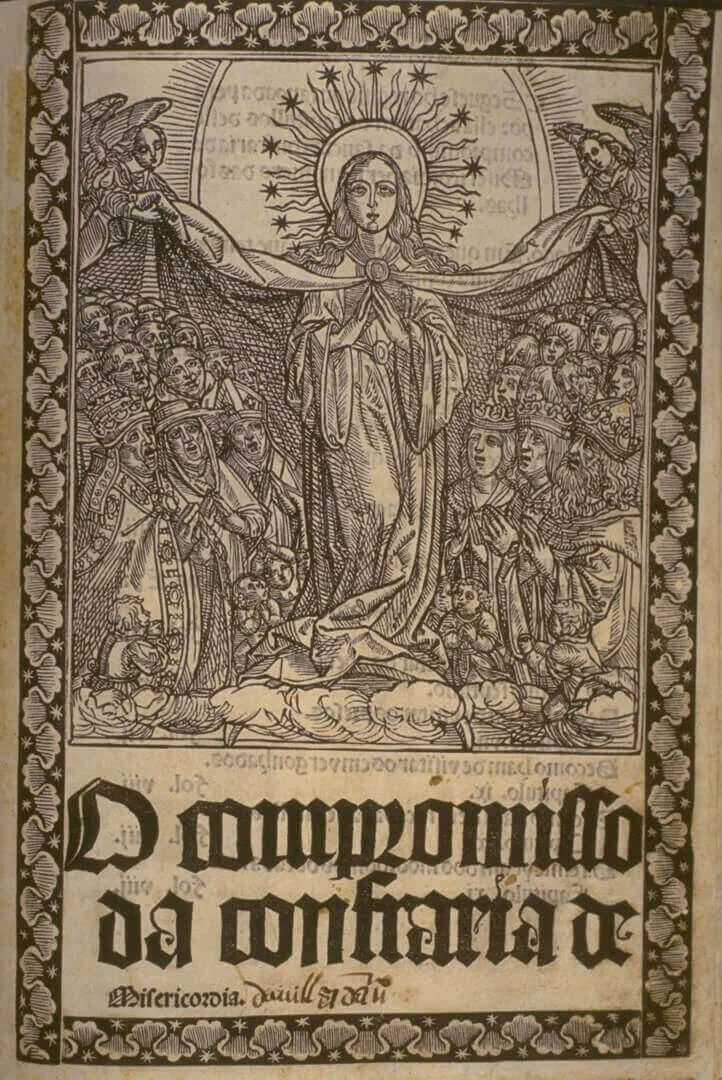
The original Compromisso of Misericórdia de Lisboa was approved by King D. Manuel I and confirmed by Pope Alexander VI. The document is believed to have been lost in the 1755 earthquake, but several copies of it were made, and a printed edition was produced in 1516, which allowed the faster dissemination of the text and facilitated the creation of other misericórdias throughout the Kingdom and in the overseas territories.
Misericórdia adopted as its identifying symbol the image of the Virgin with her cloak open, protecting the earthly powers — kings, queens, princes — and the spiritual powers — popes, cardinals, bishops, clergy and members of religious orders. A protection that extended also to all those in need — children, the poor, the sick, prisoners and others. The symbol was printed on the compromissos, drawn on tiles, sculpted on various buildings and painted on canvases, particularly on the pennants, banners or standards that each Misericórdia owned.
The rapid growth in the prestige of Misericórdia de Lisboa brought it a greater number of responsibilities, including support for orphan girls and the administration of the Royal Hospital of All Saints, with the duty of protecting abandoned children. The new brotherhoods also promoted the dissemination and practice of the 14 Works of Mercy:
Seven Spiritual
- To teach the ignorant
- To give good counsel
- To correct with charity those who err
- To comfort the afflicted
- To forgive those who offend us
- To bear injuries with patience
- To pray to God for the living and the dead
Seven Corporal
- To ransom captives and visit prisoners
- To care for and assist the sick
- To clothe the naked
- To feed the hungry
- To give drink to the thirsty
- To shelter pilgrims
- To bury the dead
1534
The effective work of Misericórdia de Lisboa was due to the commitment and generous participation of the members of the Brotherhood, to the support and protection of the Crown, and to bequests from various individuals. It is within this framework that the granting of many privileges, as well as the endowment of imposing premises — such as the new headquarters of Misericórdia de Lisboa, commissioned by D. Manuel I and completed in 1534 — can be understood.
- Misericórdia was established in August 1498, but the day of the Visitation of Our Lady to her cousin Saint Elizabeth (2 July) was chosen for its celebrations;
- Later, in the Catholic Church, the Visitation celebrations were changed to 31 May, and so the other Misericórdias also adopted this new date;
- This bringing forward to 31 May was justified so that the Visitation celebrations would fall chronologically between the Annunciation and the birth of Saint John the Baptist;
- In 1498, the day of the Visitation was chosen so that all the Brothers could meet for the election of the Mesa;
- The feast of the Visitation had been celebrated since medieval times, but in 1389 Pope Urban VI (with the aim of ending the Western Schism) instituted it in the Roman calendar on 2 July;
- In 1969, however, Pope Paul VI moved it to 31 May, between the Solemnity of the Annunciation of the Lord (25 March) and the Birth of John the Baptist (24 June), so that it would fit more harmoniously with the Gospel account.