Aldeia de Santa Isabel organised a discussion on inclusive education and social transformation
The seminar brought together experts, professionals and the educational community to share experiences and discuss teaching practices that help to pave the way for success.
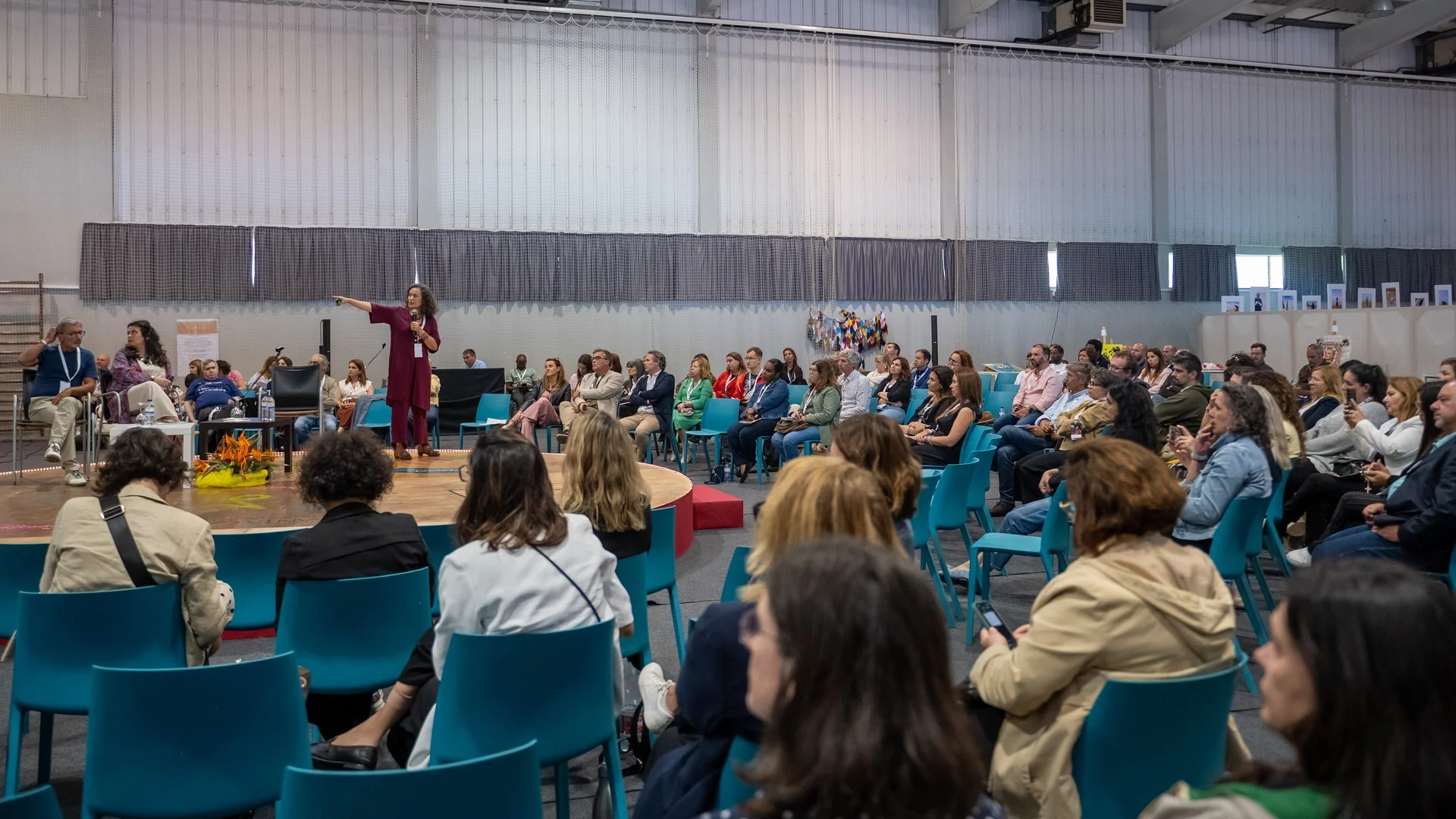
Yesterday, the Aldeia de Santa Isabel Vocational Training Centre hosted the seminar “Mapping inclusive futures: training to transform lives”, an initiative that brought together education and training professionals, experts, businesses, partner organisations and the educational community for a day of reflection, sharing experiences and highlighting the teaching practices developed at this facility run by Santa Casa da Misericórdia de Lisboa.
The opening session was attended by Rita Prates, Vice-Provedora of Santa Casa da Misericórdia de Lisboa, who highlighted the importance of training and education as fundamental tools for inclusion, autonomy and the creation of opportunities for young people.
Throughout the morning, participants had the opportunity to gain a first-hand insight into the work carried out at Aldeia de Santa Isabel through educational visits and training experiences that showcased different teaching methodologies, curriculum integration projects, strategies for differentiated teaching, innovative learning spaces and initiatives focused on the development of personal and social skills. The workshops on carpentry, electricity and citizenship, the Garden of Proverbs and the exhibition of learning outcomes provided a concrete demonstration of the quality of the educational programme run by the Aldeia de Santa Isabel and the impact it has on the lives of its trainees.
One of the most popular parts of the programme was the cultural event ‘Aldeia de Santa Isabel Got Talent’, which showcased the talent, creativity and engagement of the young people, putting into practice the results of an educational approach centred on the holistic development of the individual.
During the afternoon, the reflection and debate panels provided a rich and inspiring discussion on the current challenges facing education and training. Experts, teachers and professionals in the field shared experiences and best practice on topics such as the importance of teaching practices beyond the curriculum, the influence of context on learning, and the role of human relationships in motivation and educational success. The contributions from Constança Azevedo, Paulo Torcato and Alfredo Gomes, as well as those from the teachers at Aldeia de Santa Isabel, enriched a debate that stood out for the quality of the reflections and the diversity of perspectives presented.
The seminar culminated in the round-table discussion “Thinking about the Future…”, which brought together Ana Cláudia Valente, Deputy Director-General of the Directorate-General for Employment and Labour Relations, and Rui Marques, Coordinator of the Relational Lab, for a moment of reflection on the future challenges facing education, training and employability.
The closing session featured speeches by Adriano Moreira, Deputy Secretary of State for Labour, and Ângela Guerra, Director of Misericórdia de Lisboa, who emphasised the importance of continuing to invest in educational solutions that are inclusive, innovative and centred on each person’s potential.
The success of the initiative confirmed the significance of the work carried out by the Aldeia de Santa Isabel Vocational Training Centre, a leading educational project that continues to demonstrate how education, training and personalised support can transform people’s lives, promote inclusion and open up new opportunities for the future for hundreds of young people.
